For years, state governors, security experts and ordinary citizens have pushed for the creation of state police to tackle local security challenges more effectively. That push has now entered a new phase.
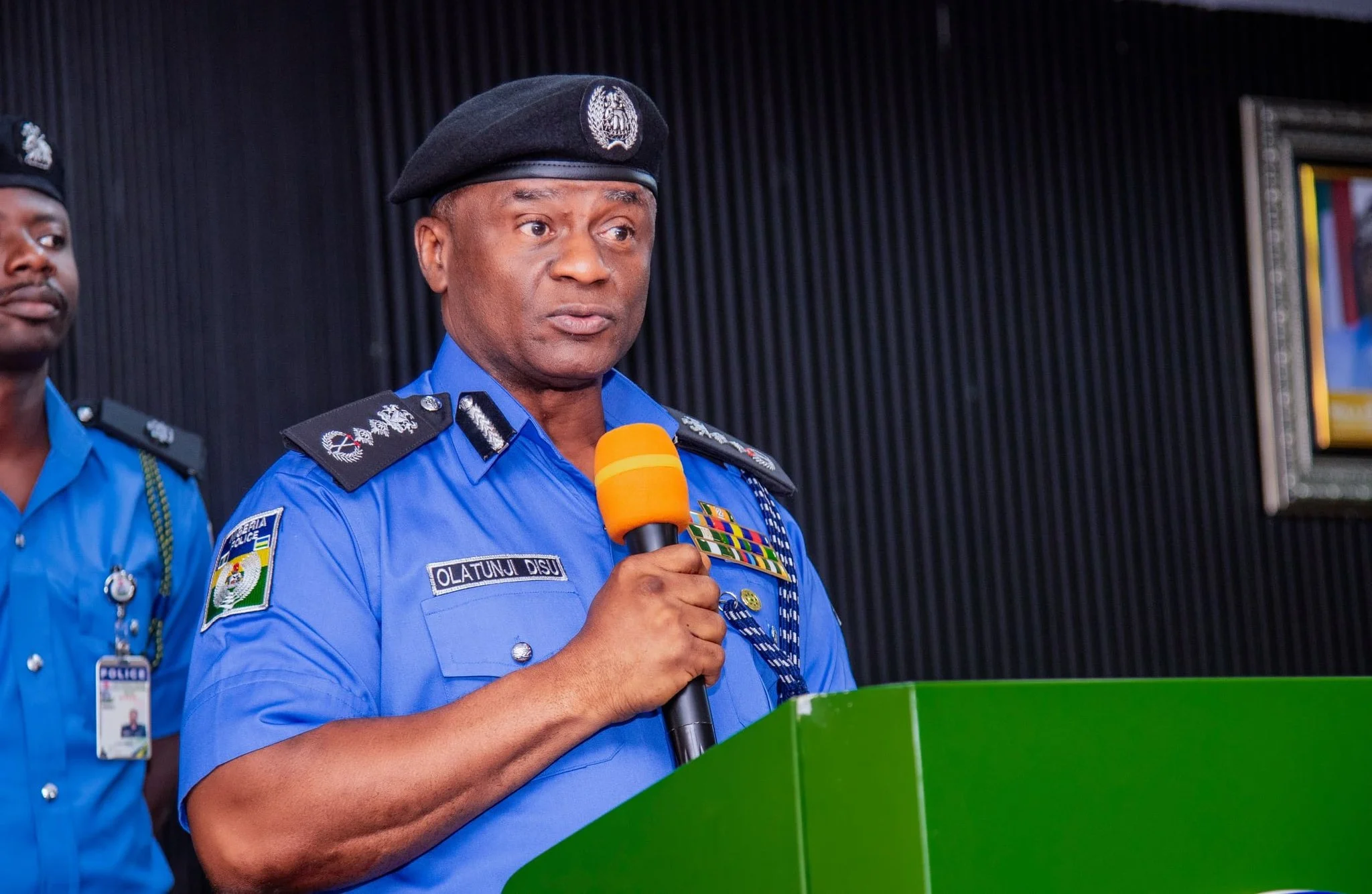
Newly confirmed Inspector-General of Police, Olatunji Disu, has wasted no time in addressing the issue. On Wednesday, he inaugurated a high-level 8-man committee charged with developing the operational framework for state policing in the country.
The man talk am clear: decentralised policing “has come to stay” — but e must not scatter national security.
The Koko (The Core Facts)
- The committee is chaired by Professor Olu Ogunsakin, Director-General of the National Institute for Police Studies, with Commissioner of Police Bode Ojajuni as secretary.
- Other members include serving senior police officers and a retired commissioner of police.
- The panel’s mandate covers review of local and international policing models, assessment of community-specific needs, and recommendations on recruitment, training, funding, command structure, accountability and coordination with the federal police.
- Deadline: Four weeks to submit the full report.
- IGP Disu has stressed that state police will complement rather than replace the Nigeria Police Force, with the aim of enhancing overall national security.
The Flash (The Viral Angle)
The announcement has already triggered widespread reactions. Governors who have long championed state police see it as validation of their position, while others worry about the risk of politicisation and abuse by state executives.
Social media platforms are buzzing with divided opinions: some hail it as the beginning of real security reform, others caution that without strong safeguards, it could create “governors’ private armies.”
As the committee begins its work, attention now shifts to the quality of the framework that will emerge and whether it will receive the necessary constitutional backing.
What This Means for You
If the framework is adopted and followed by constitutional amendment, states could soon have police forces better equipped to understand and respond to local threats – whether banditry in the North-West, cultism in the South-West, or separatist agitation in the South-East.
Response times could improve dramatically, and intelligence gathering would become more community-focused. However, the real test will be the oversight mechanisms put in place to prevent misuse.
The coming four weeks will be decisive.
Stay glued to KokoFlash. The moment the panel submits its report, we will break down the key points into the five things you actually need to know.
About The Author